
The Restorative Power of Art
Have you ever looked at a painting that stopped you in your tracks? A painting that made you feel hopeful or inspired you for the rest of the day? I have always believed that art can change how we feel.
It’s one of the reasons I paint. I’m drawn to places and colors that make me stop—to the misty highlands of Scotland, the endless blues of the Caribbean waters or a Nantucket flower box overflowing with color. When I bring those experiences back to the studio, I don’t try to recreate what I saw. I try to recreate how it felt to be there.
There is evidence that suggests art may be doing much more for us than we realize.
Art Isn’t Just Something Beautiful to Look At
There are exciting studies about the relationship between engaging with the arts and healthy aging. What caught my attention was the idea that visiting a gallery or museum could have positive effects on our bodies. Could That Museum Visit Help You Live Longer? Wall Street Journal, July 18, 2026
A 2026 study from University College London examined arts and cultural engagement in more than 3,500 adults. Researchers found that people who participated in the arts more frequently—and in a variety of ways—showed signs of slower biological aging.
We hear so much about the importance of exercise and nutrition to stay healthy. Maybe we should also be asking ourselves:
When was the last time I did something that filled me with wonder?
Your Brain on Art
That question is addressed in a fascinating book I’ve been reading -Your Brain on Art: How the Arts Transform Us, by Susan Magsamen and Ivy Ross.
The authors explore the emerging field of neuroaesthetics—the study of what happens in our brains and bodies when we engage with art.
Research discussed in the book explores how experiences involving painting, music, movement, writing and other forms of creativity can influence stress, learning, memory, emotion and connection. The authors describe evidence that even spending about 45 minutes making art can lower cortisol, a hormone associated with stress.
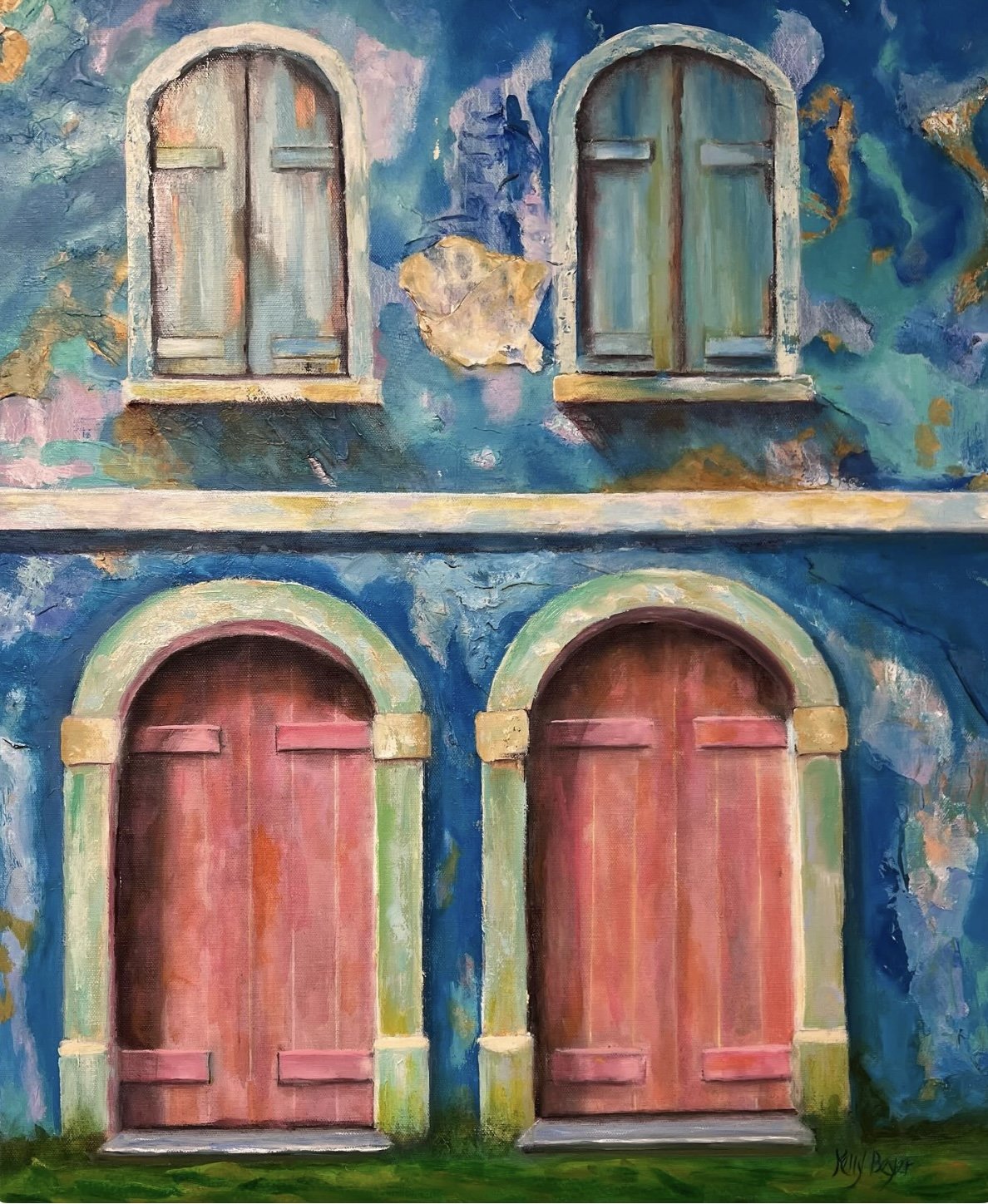
Our Response to Color Goes Deeper
After years of weathering hurricanes, hot sun, and rain, this abandoned house in St. Thomas, USVI, took on a beauty all its own. Its weathered colors tell a story of resilience—a reminder that beauty can endure, even deepen, through difficult times.
Hidden in Plain Color
Color has always been central to my work.
I use color expressively rather than simply trying to reproduce exactly what exists in front of me. I want a landscape to feel more alive. I want the blues to feel more expansive, the greens more restorative, the light warmer.
My paintings are a blend of realism and impressionism. They begin with a real place, but there is always something more in the picture—a story, an emotion, a feeling I want to preserve.
Maybe that’s why we sometimes stand in front of a painting much longer than we intended, looking at the individual brushstrokes and colors. It’s as if we can feel the energy of the artist—and perhaps that’s why we walk away feeling inspired or hopeful.
Something is happening within us
We Don’t Have to Be Artists to Experience It
One of the things I love most about this research is that experiencing the benefits of art doesn’t require artistic talent.
You don’t have to know anything about art history.
You don’t have to understand why a painting is considered important.
And you don’t have to know how to paint.
You just have to engage.
Visit a museum. Wander through a local gallery. Listen to music that moves you. Notice the architecture of an old house.
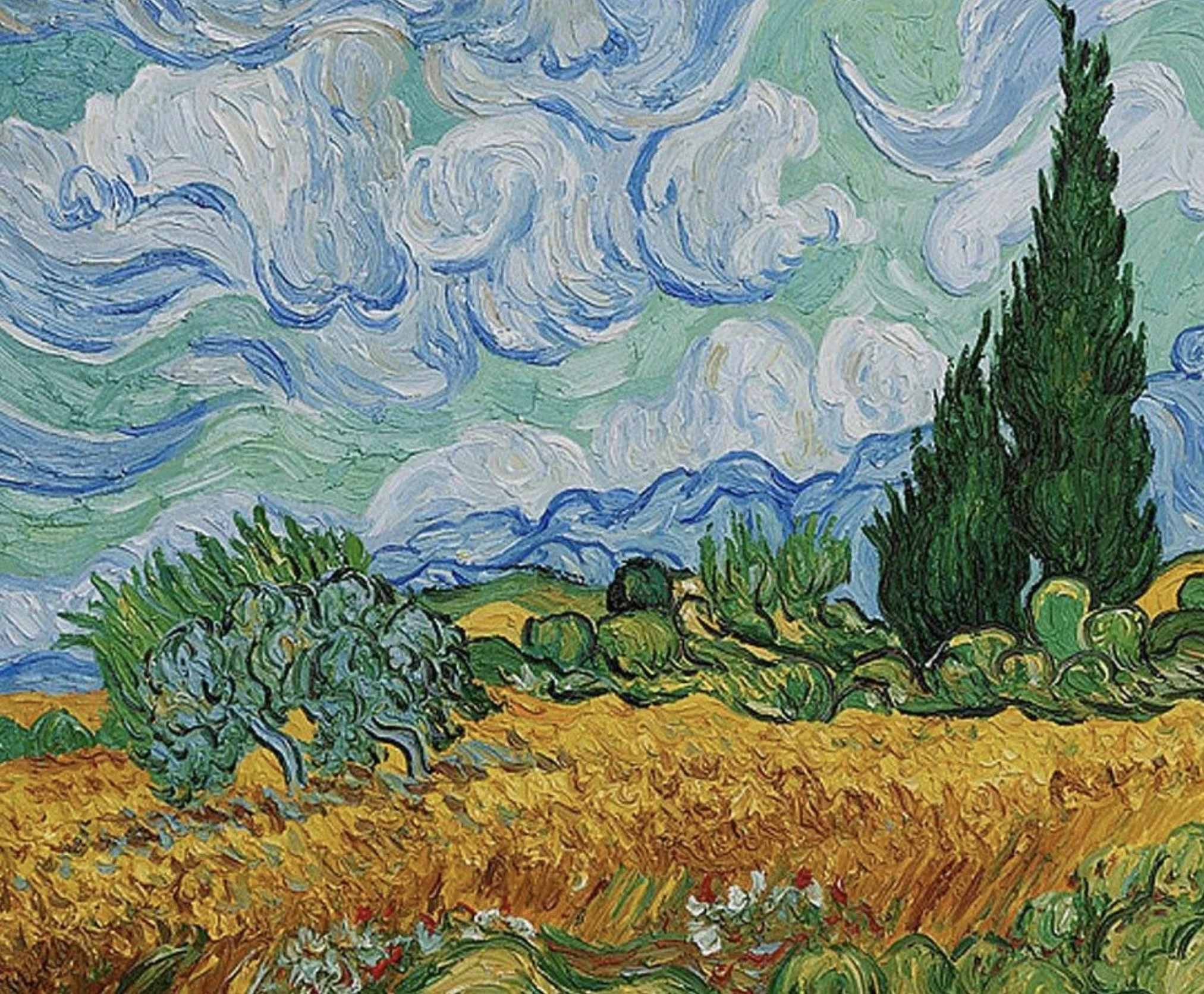
Van Gogh
Artists like Van Gogh understood the healing power of art. During some of the most difficult periods of his life, painting gave him comfort, purpose, and hope. He even referred to painting as his “chief remedy.” If you get the chance to see Van Gogh’s paintings in person, notice the thickness of the paint, the intensity of the color, and his expressive brushstrokes. He saw magical movement in the sky, trees, and flowers. It’s that sense of movement that creates a feeling of wonder. Van Gogh Letters
Vincent van Gogh, A Wheatfield, with Cypresses, 1889
Experiencing art isn’t another task to check off our wellness list. It can easily be part of how we live.
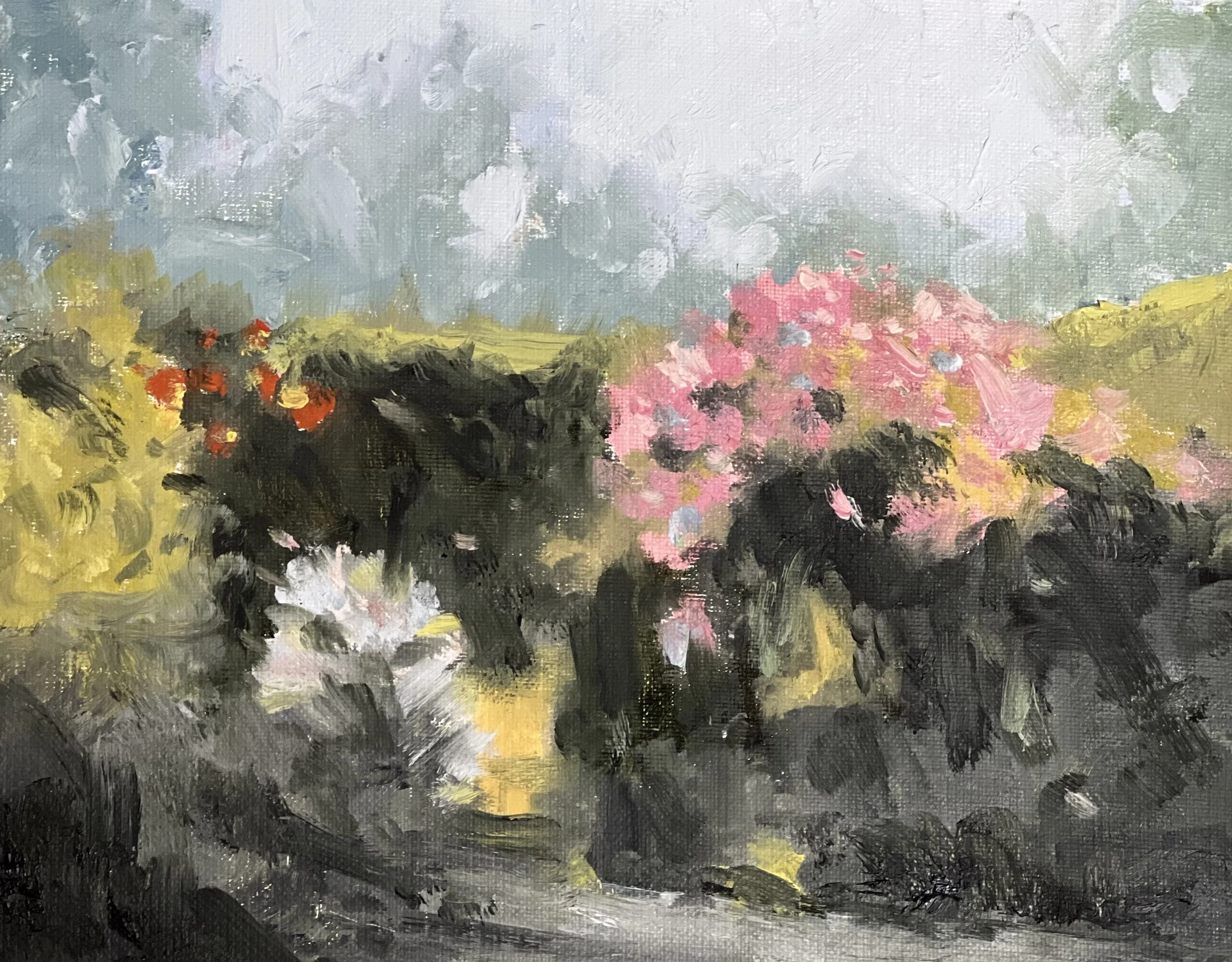
Creating an Extraordinary World
In my own work, I try to create that same sense of wonder. In Garden Party, instead of painting realistic flowers, I wanted to capture a mood—the feeling of laughter beyond the hedges, sunlight filtering through petals, and a garden that seems to be holding a celebration of its own.
Garden Party
My goal as an artist is to invite people to pause and experience not an ordinary world, but an extraordinary one.
The more I learn about the connection between art and our well-being, the more meaningful that statement becomes to me.
Maybe the purpose of a painting isn’t to fill an empty wall.
Maybe the painting you walk by every morning gives you a moment of calm. Maybe it reminds you of somewhere you’ve traveled or somewhere you still hope to go. Maybe it makes you pause for just a few seconds and notice something beautiful.
Those small moments matter.
Science is beginning to measure something artists and art lovers may have intuitively understood for centuries: art changes us.
And perhaps surrounding ourselves with beauty isn’t an indulgence after all.
Perhaps it’s one of the ways we take care of ourselves.
Inspired by the research explored in Your Brain on Art: How the Arts Transform Us by Susan Magsamen and Ivy Ross, and recent research from University College London on arts engagement and biological aging.